

What is Aglianico?
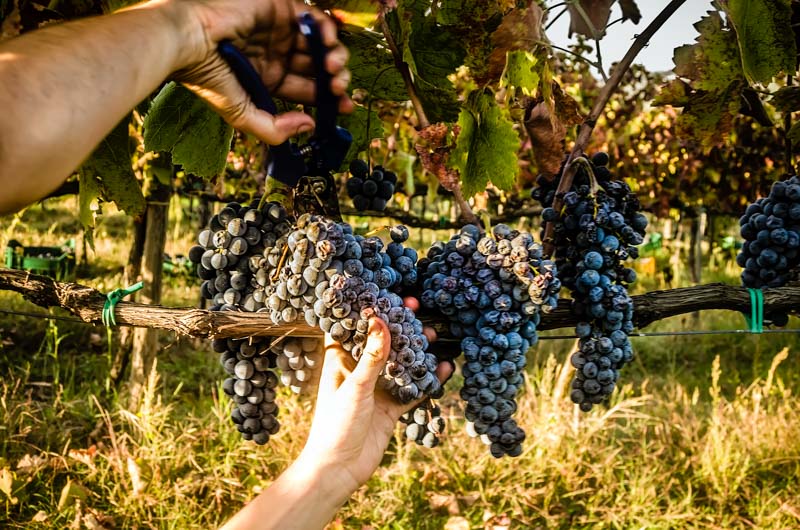
Aglianico represents one of Southern Italy’s most prestigious wine treasures, crafted from ancient black grapes that originated in Greece over 2,000 years ago. Moreover, this remarkable Aglianico grape variety has found its perfect home in the sun-drenched vineyards of Campania, where volcanic soils create ideal growing conditions.
Life is too short to drink bad wine
Pronounced “ahl-YAH-nee-koe,” Aglianico wine showcases the rich heritage of Italian winemaking. Furthermore, I’ve documented the intricate process that transforms these ancient grapes into extraordinary wines.
The Ancient Echoes of Vitis Hellenica
My journey into the world of Aglianico began not with a glass of wine, but with the earth itself, right here in the Campi Taurasini. This is ground steeped in legend, where in 273 B.C. the Roman legions, led by Manlio Curzio Dentato, clashed with the army of King Pyrrhus of Epirus.
The defeat of Pyrrhus marked the end of Greek dominion in Southern Italy. Yet, the Hellenic civilisation left behind an indelible cultural legacy—among which was the cultivation of the vitis hellenica, the ancient root whose name, over centuries, evolved into Aglianico.
A Day in the Vineyard: Capturing the Essence of Aglianico Harvest
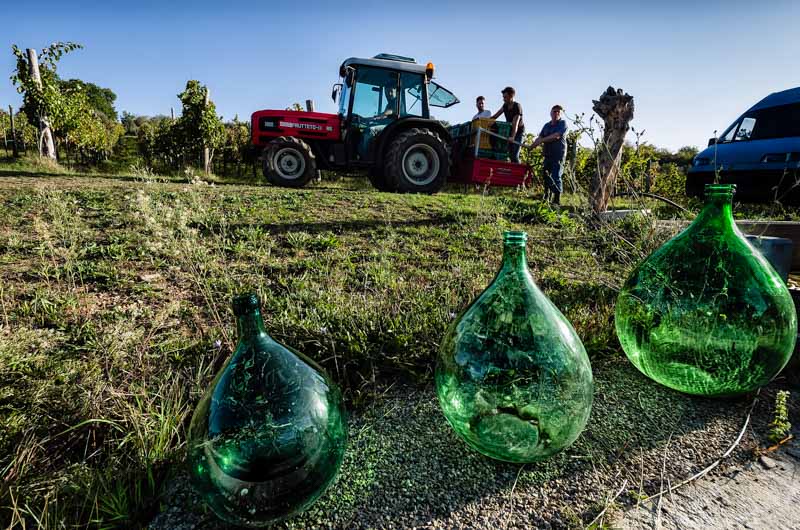
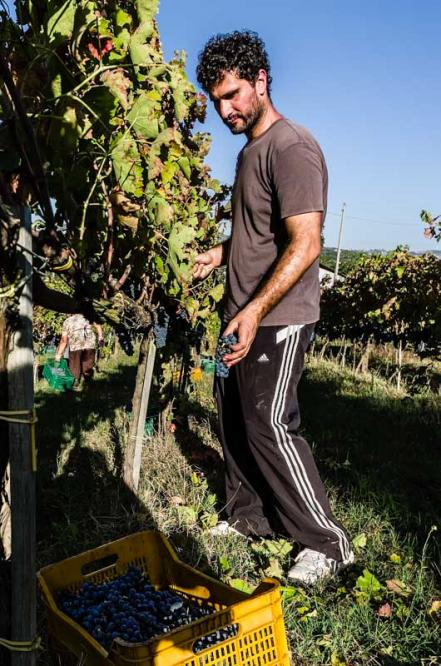
It all started with a simple phone call: an invitation from a friend to join the harvest in his vineyards, located right in the heart of the DOCG area. I accepted immediately, driven less by expertise and more by the curiosity of documenting a profound, ancient ritual. I arrived with my camera ready, unsure of what awaited me.
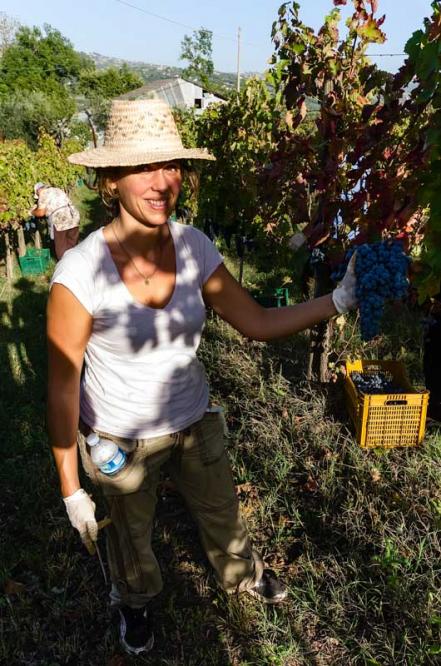
The first thing that struck me was the silence—not absolute, but a different kind of quiet from the city noise. It was a soundtrack composed of small, intimate sounds: the snipping of shears, the rustle of autumn-coloured leaves, and the soft thud of the precious Aglianico grapes falling into baskets.
The work was hard, but the company was warm. Amidst the laughter, sweat, and simple, delicious homemade food (paired with a little local wine to fuel the spirit), a deep sense of community prevailed. While everyone else was busy cutting and gathering, I focused my lens on capturing this essence: from the intricate patterns of the bunches ready for cutting to the mesmerizing moment they plunged into the destemmer for the first pressing.
For my images, I sought out the best light, especially during the late afternoon—preferable due to the orientation of the vines. My trusty Sigma 8-16mm was my lens of choice, given the limited space between the rows.
The pressing is where the story pauses. The must will now start its long process of fermentation and aging—a transformation I hope to document in the future.


Aglianico Wine: A Symphony of Flavors and Ageing Potential
The result of this careful cultivation is a complex and full-bodied Aglianico wine boasting firm tannins and vibrant acidity. Indeed, Aglianico features an intense bouquet with rich flavors of dark fruit, warm spices, and distinctive earthy notes.
Furthermore, Aglianico wine promises exceptional ageing potential, developing remarkable depth and complexity over time. As a result, these wines perfectly complement hearty Mediterranean dishes, particularly succulent lamb and aged cheeses.
Aglianico’s Aging Journey:
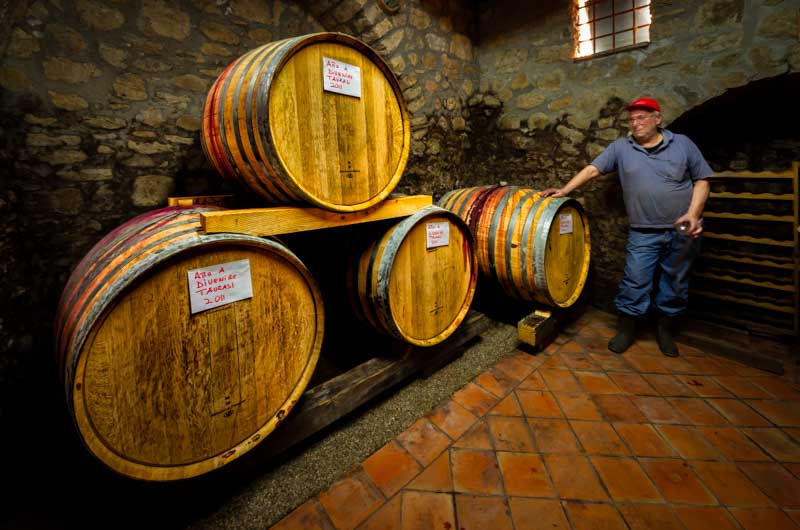
Initially, young Aglianico displays bright fruit characteristics with youthful vigor. However, as it matures in oak casks and later in a bottle, it undergoes a remarkable transformation.
Over time, the wine reveals deeper complexity, showcasing notes of chocolate, tobacco, and plum. Meanwhile, its deep garnet color becomes more pronounced, creating a visual testament to its evolution.
Ultimately, Aglianico rewards patience – it’s a wine that truly evolves and improves with proper cellaring.
The Aglianico Vine: Resilience and Terroir
Aglianico is a resilient variety, thriving in arid Mediterranean climates and the ample sunlight that bathes the volcanic terroir of Campania. This resilience is vital because, despite its ability to withstand drought, the vine demands constant, careful cultivation.
The unique character of the wine develops gradually throughout the extended growing season, shaped by two key factors:
- Late Harvest: The grapes are often picked as late as November.
- Volcanic Soil Affinity: It draws minerality from the rich, volcanic earth of Irpinia.
![L'Aglianico è un vitigno rosso coltivato prevalentemente in Basilicata, Campania, Puglia e Molise.È un vitigno antico, probabilmente originario della Grecia e introdotto in Italia intorno al VII-VI secolo a.C. Una delle tante testimonianze della sua lunga storia è il ritrovamento dei resti di un torchio romano nella zona di Rionero in Vulture, provincia di Potenza. Non ci sono certezze sulle origini del nome, che potrebbero risalire all'antica città di Elea (Eleanico), sulla costa tirrenica della Campania, o essere più semplicemente una storpiatura della parola Ellenico. Testimonianze storico-letterarie sulla presenza di questo vitigno si trovano in Orazio, che cantò le qualità della sua terra natia Venosa e del suo ottimo vino. Il nome originario (Elleanico o Ellenico) divenne Aglianico durante la dominazione aragonese nel corso del XV secolo, a causa della doppia l pronunciata gli nell'uso fonetico spagnolo.E' il vitigno fondamentale per la produzione del prestigioso Taurasi, importante DOCG rosso del Sud Italia.Aglianico (pronounced [aʎˈʎaːniko], roughly "ahl-YAH-nee-koe") is a black grape grown in the Basilicata and Campania regions of Italy. The vine originated in Greece and was brought to the south of Italy by Greek settlers. The name may be a corruption of vitis hellenica, Latin for "Greek vine." Another etymology posits a corruption of Apulianicum, the Latin name for the whole of southern Italy in the time of ancient Rome. During this period, it was the principal grape of the famous Falernian wine, the Roman equivalent of a first-growth wine today. In Campania, the area in and around the village of Taurasi produces Aglianico's only DOCG wine, also called Taurasi. The Aglianico vine buds early and grows best in dry climates with generous amounts of sunshine. It has good resistance to outbreaks of oidium, but can be very susceptible to Peronospera. It also has low resistance to botrytis, but since it is much too tannic to make a worthwhile dessert wine, the presence of this noble rot in the vineyard is more of a viticultural hazard than an advantage.The grape has a tendency to ripen late, with harvests as late as November in some parts of southern Italy. If the grape is picked too early, or with excessive yields, the grape can be aggressively tannic. The vine seems to thrive in particularly volcanic soils.](https://www.photosontheroad.eu/wp-content/uploads/2022/03/21102012-21102012-1210_Paternopoli-Vendemmia_5880.jpg)
Final Frame: The Patience of Time
The harvest, like fine wine and documentary photography, demands patience and respect for time. It is a profound, annual ritual—a moment where thousands of years of history and the future of an exceptional vintage converge. Through my lens, I aimed to capture this authentic energy, the sweat, and the joy that transform the Aglianico grape into a masterpiece.
This is more than a wine; it is a cultural artefact, and its story is one I am proud to share.
The Video
I also created a short presentation on YouTube—a selection of the best photos (in my opinion!) mixed with a few seconds of video, all shot with my Pentax K-5. Here it is:

Did you like this story?
Subscribe to my newsletter for new photographic stories and travel tales delivered straight to your inbox.
I only write when I have something meaningful to share.
No spam, ever
Or perhaps you’d just prefer to browse all the harvest photographs? The gallery is right here.