
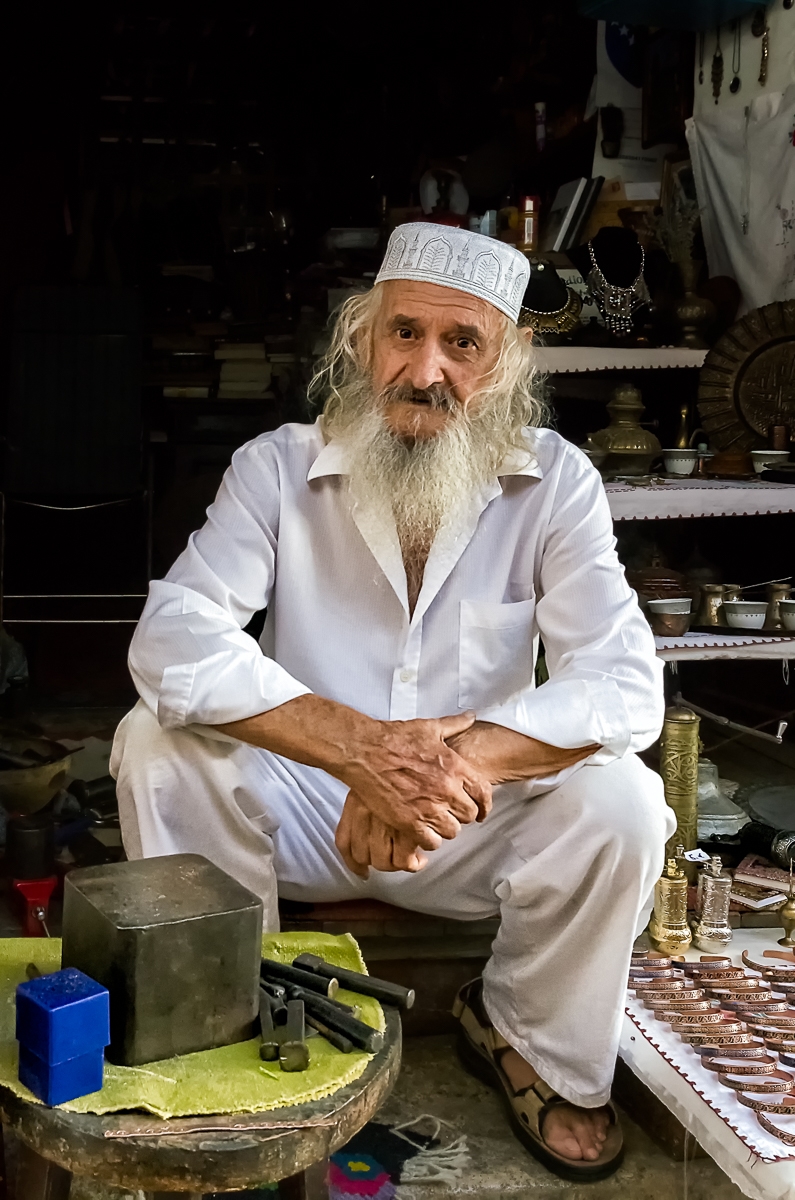
In one of the narrow, overcrowded streets near the Old Bridge of Mostar, I met a copperware craftsman working in a tiny shop. He was dressed entirely in white: long white hair, a flowing beard, and a beautiful traditional cap. His appearance suggested age, yet his eyes were strikingly young.
I estimated he was around fifty. That means that during the siege of Mostar in 1993, he must have been about twenty‑five, certainly not younger.
He didn’t speak any language other than his own, so we communicated only through gestures. His movements were calm, almost meditative. With his large hands, he shaped delicate pieces of copperware, each one crafted with precision and quiet dignity.
As I watched him work, a question surfaced — one that remained unspoken:
What about holding a rifle?
In a region where no one emerged untouched from the conflicts of the late 20th century, I couldn’t help but wonder what this man had seen, what he had survived, and whether he had been forced to take a life.
Yes, of course, I bought something from him. But the real exchange was silent — a moment suspended between craftsmanship, memory, and the unspoken weight of history.
Walking away, all the questions stayed with me, buried yet persistent.
What atrocities has he seen? What did he survive? Did he kill somebody?
No one living in the area of the former Yugoslavia at the end of the XXth century is immune, I am pretty sure.
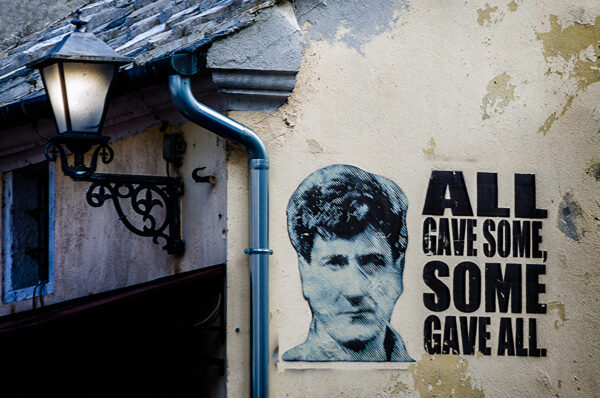
Mostar’s walls still whisper: “All gave some, some gave all.”
Pingback:Sarajevo: Where it all began (or went to an end) -